Description
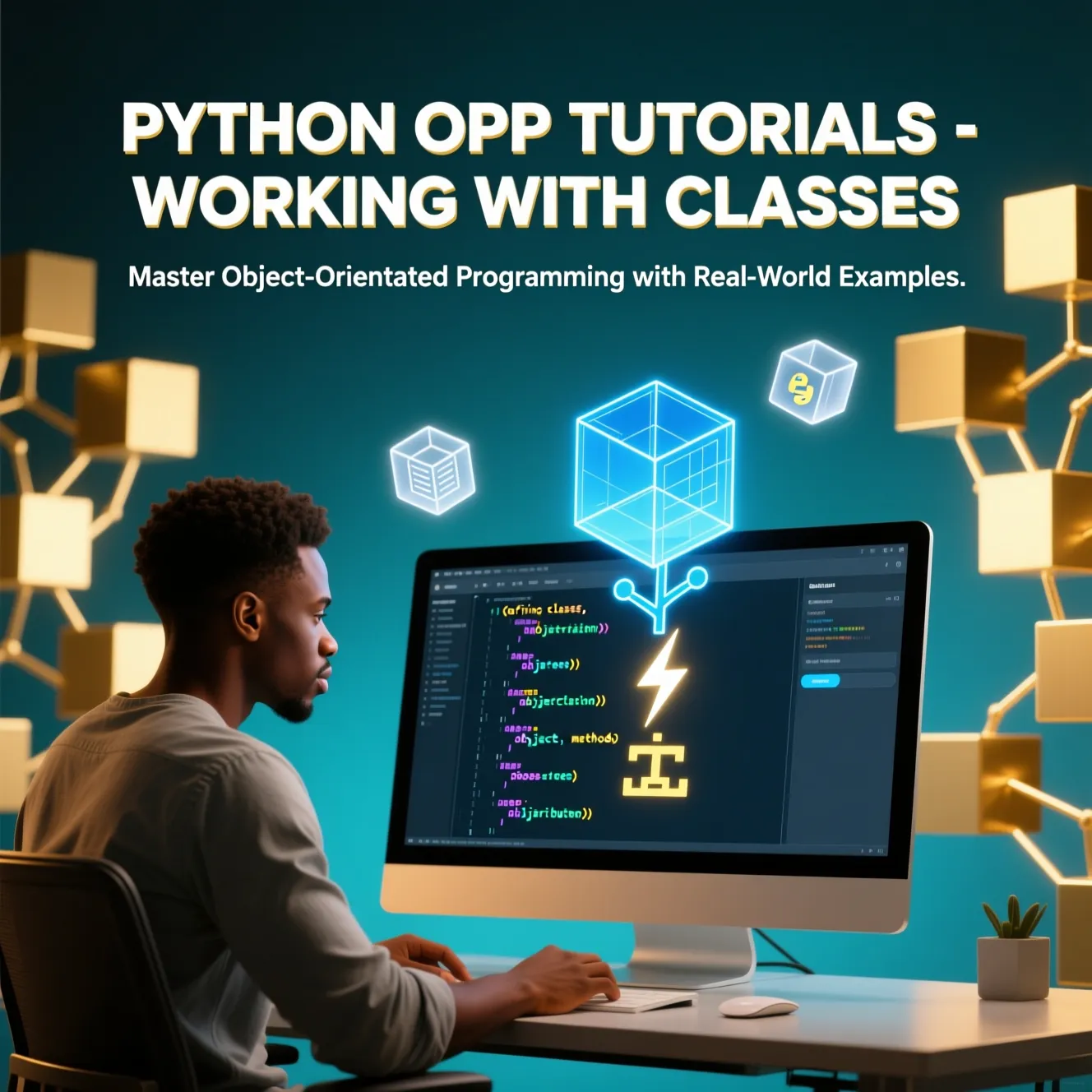
Python OOP: Write Professional, Maintainable Code from Day One
If you’re still writing scripts with global variables and functions everywhere, you’re not writing Python—you’re writing procedural code with Python syntax. This course teaches you to think in objects, encapsulation, and design patterns—the foundation of every serious Python project.
What You’ll Build
- A banking system with accounts, transactions, and user roles
- A library management app with books, members, and checkouts
- A game character hierarchy using inheritance and polymorphism
- A plugin architecture using abstract base classes
- A logging and error-handling system using composition
Core Concepts Covered
- Classes and objects—the blueprint vs. the instance
- Encapsulation—private vs. public attributes and methods
- Inheritance—code reuse and method overriding
- Polymorphism—one interface, multiple implementations
- Special methods like
__init__,__str__,__len__ - Composition over inheritance—the modern OOP best practice
Why OOP Matters in 2025
- Industry standard—95%+ of professional Python codebases use OOP
- Interview essential—OOP questions appear in every mid-to-senior dev interview
- Project scalability—OOP lets you manage complexity as your app grows
Who Should Take This?
- Python beginners who’ve written scripts but not structured programs
- Self-taught coders preparing for job interviews
- Students needing OOP for university projects
- Freelancers wanting to deliver professional, maintainable code
From Script Writer to Software Engineer
This course bridges the gap between “it works” and “it’s production-ready.” You’ll learn to design clean APIs, write reusable components, and structure code that other developers will thank you for.
OOP isn’t just a topic—it’s a mindset. Start thinking like a pro today.